Cohort opens 6 October 2026
You have watched enough about portfolios. This is where you build one.
Six weeks, six deadlines, and a live clinic every Friday where two architects work through your architecture portfolio with you. You leave with a document you would put in front of the office you actually want.
30 Cohort seats. 10 VIP seats, by application.


B
Ben
496
Reply
A
Agus
155
Reply
L
Lena
28
Reply
S
Sofia
19
Reply
We did not guess. We read all 1,607 comments.
The most-liked comment on our reviews has nothing to do with technique. It is someone describing the moment they got stuck with too many possibilities, too many layouts, and nothing gets chosen. The second most-liked is about confidence. Software barely comes up.
Real comments from our portfolio review series. Names and photos replaced with placeholders. The words and the like counts are untouched.
Four things stall a portfolio. None of them is talent.
Ranked by what actually came up, in the comments, the reviews, and the room, not by what sounds persuasive.
A
Paralysis by analysis
Forty saved videos, six reference boards, three abandoned InDesign files. Every new option adds a decision instead of removing one. The Cohort answers this with a fixed calendar and a deliverable each week: the decision is already made, you just execute it.
B
The comparison spiral
Seeing finished, polished portfolios back to back makes your own work look worse than it is. The problem is the reference, not the motivation. Week one we show our own first portfolios, and the group works with drafts on screen instead of finished pieces.
C
Projects that don't look like one person made them
Different semesters, different scales, group work where four people had four styles. Rebuilding each project to match is the slowest possible fix. We work on the cohesion layer instead (grid, line weights, type, color) and on how to state your own authorship inside a group project without inflating it.
D
The file that doesn’t fit the brief
15 MB caps. Five-page maximums. An online portfolio bill that costs more than a month of studio software. A portfolio that can't be submitted is not finished, so export and publishing are a week of the workshop, not a footnote.
Every one of those is a decision problem. A portfolio is a sequence of decisions before it is a design task, which is why more information has not fixed it and why watching one more review will not either.
The Portfolio Workshop is structured around four core parts that work together.
The Masterclass
(recorded)
The principles, shown on real portfolios rather than described. Structure, visual cohesion, narrative, and how the decisions get made. Watch on your own time, as many times as you want, with English subtitles.
Portfolio in Action
(recorded)
Both of us building a portfolio end to end, with the decisions said out loud as we make them. What gets picked, what gets cut, what gets paired with what, and the order it all goes in. Participants keep telling us this is the part nothing else teaches.
The Playbook
(yours to keep)
The written plan you build from. What you decide each week, what is due, the checklists, and the export and file-size specs at the back. It sits on paper instead of in your head, and it still works the next time you rebuild your portfolio.
The Method
(open all year)
Everything we teach about portfolio, in the order it is meant to be worked through. Work through the three on your own time and you finish with a portfolio.
Portfolio Clinic
(live, every Friday)
Ninety minutes where real work goes on screen and we go through it. We mark up layouts, sketch alternatives, and answer whatever stopped you that week. Everyone's work comes up, so you watch the same judgment applied to twenty other portfolios besides yours.
The Method
(open all year)
Everything we teach about portfolios, in the order it is meant to be worked through. Work through the three on your own time and you finish with a portfolio.
Where the advice comes from.
The theory comes from design and editorial writing sources that settled most of this long before us. The practice comes from portfolios, more than a thousand of them read between us, and from the offices they get sent to.
Portfolios we have read
1,422
portfolios collected into a reference archive, sent in by the community around both channels
66
of those taken apart page by page to build the masterclasses, so every principle is shown on real work
3.67M
views on nineteen public portfolio reviews, tested in the open long before any of it was sold
60+
countries those portfolios have come from
Offices we have been inside
BIG
Zaha Hadid Architects
Heatherwick Studio
Office visits and interviews with partners, plus a number of smaller practices we have not listed. We asked the people who actually read the applications what makes them stop.
Schools that have invited us in
UFM, Guatemala
Private workshops delivered on campus.
Virginia Tech, USA
Invited twice as a portfolio reviewer
Universidad de los Andes, Colombia
Private workshop delivered on campus


You have probably already seen one of these.
Nineteen portfolio reviews across two channels, made long before any of this was for sale. The way we read a portfolio was worked out in those videos, in public, on other people's work. They are all still up and they are all still free.
Six weeks. One deliverable each. No negotiating the dates.
A masterclass on Monday, three days to apply it to your own file, a live clinic on Friday where Steven and Oliver go through the work.
Clinics are recorded and you keep every recording for one year.
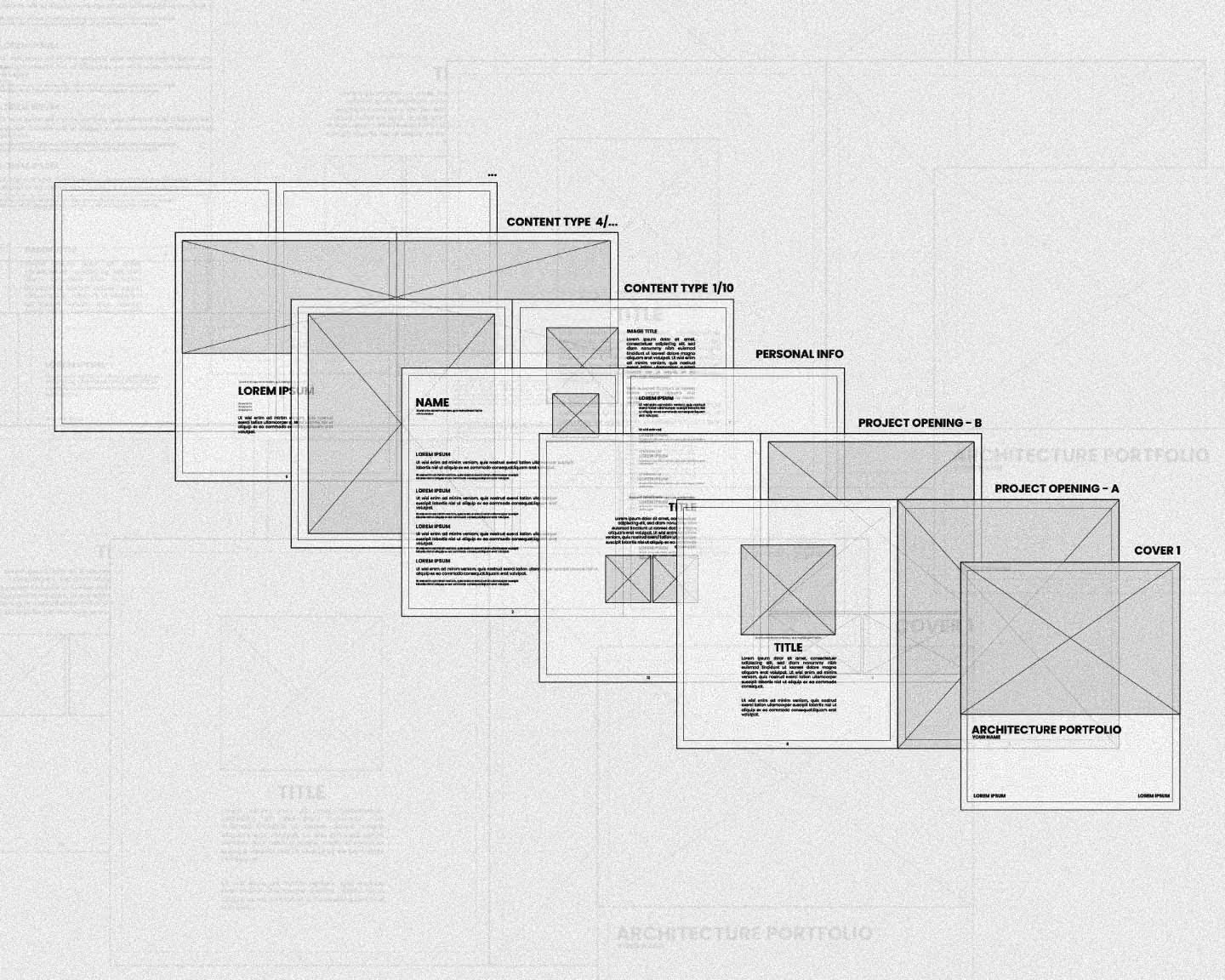
Define and Select
Decide what this portfolio is for and what earns a place in it. The goal is to leave with a clear brief and a considered project list to build from.
What you'll learn
What a portfolio is actually for
The five techniques that make a portfolio worth reading
How to decide which projects prove the skills your reader needs to see
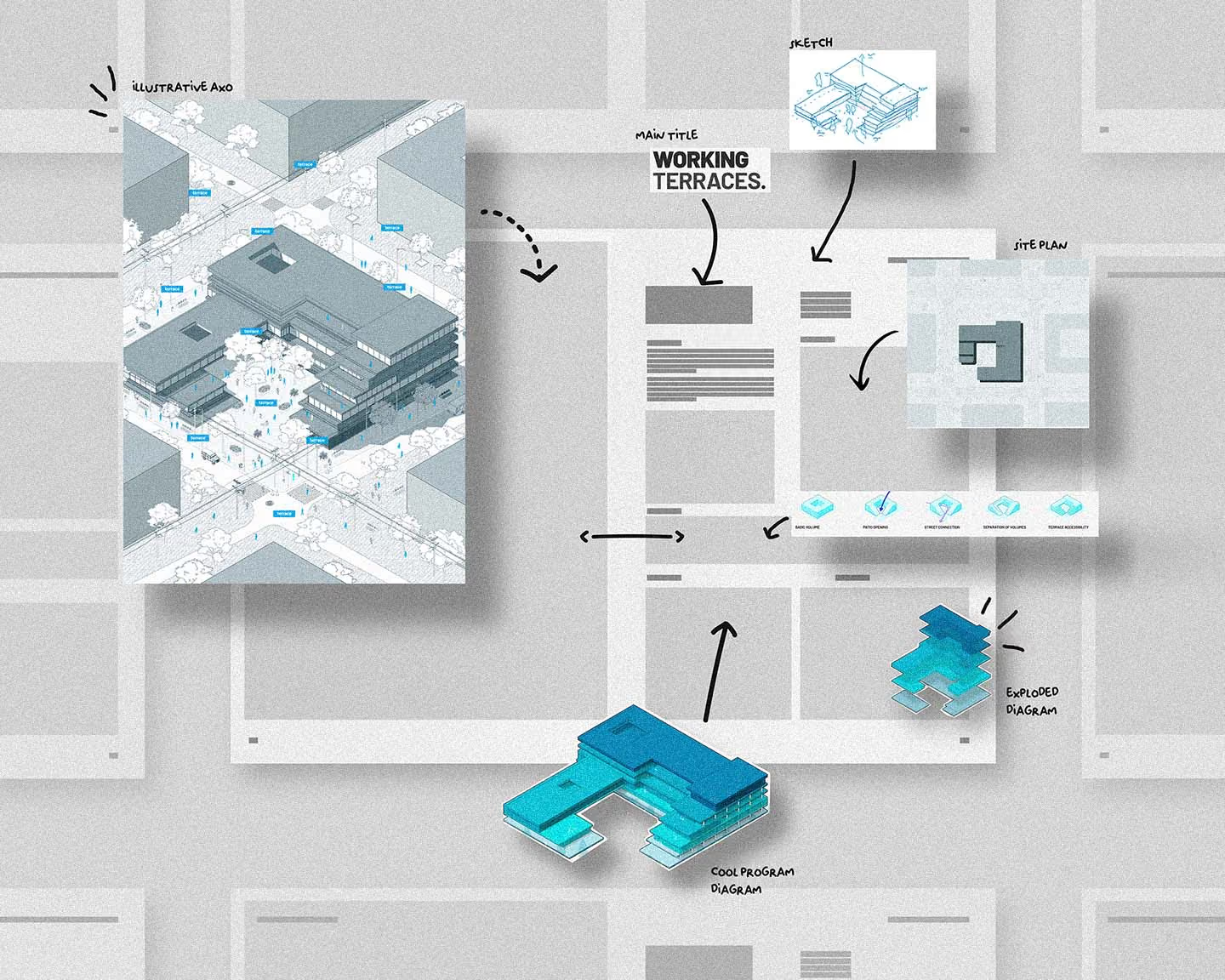
Set the System
Build the page system, then make one spread that proves it works. This is where the visual rules for the whole document are set.
What you’ll learn:
The three narratives, and how they work together
Format, size and weight as design decisions
Grids, margins and the numbers behind readable text
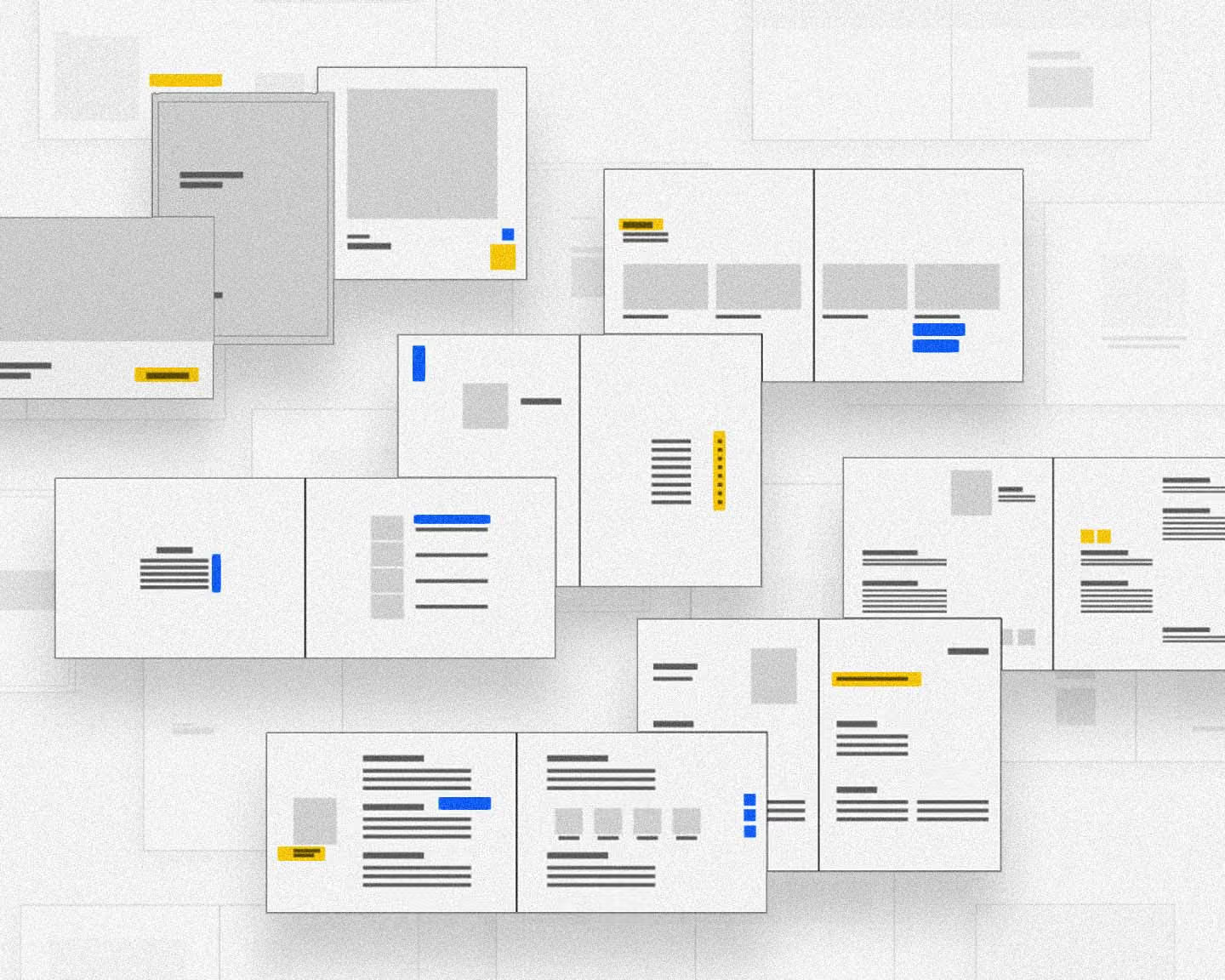
The Front Matter
Draft the table of contents and CV. These are the pages that frame how someone meets your work before they see the projects themselves.
What you’ll learn:
Why first impressions are a matter of narrative control
How the table of contents can show design thinking
How to organize a CV for fast reading, without losing the important details
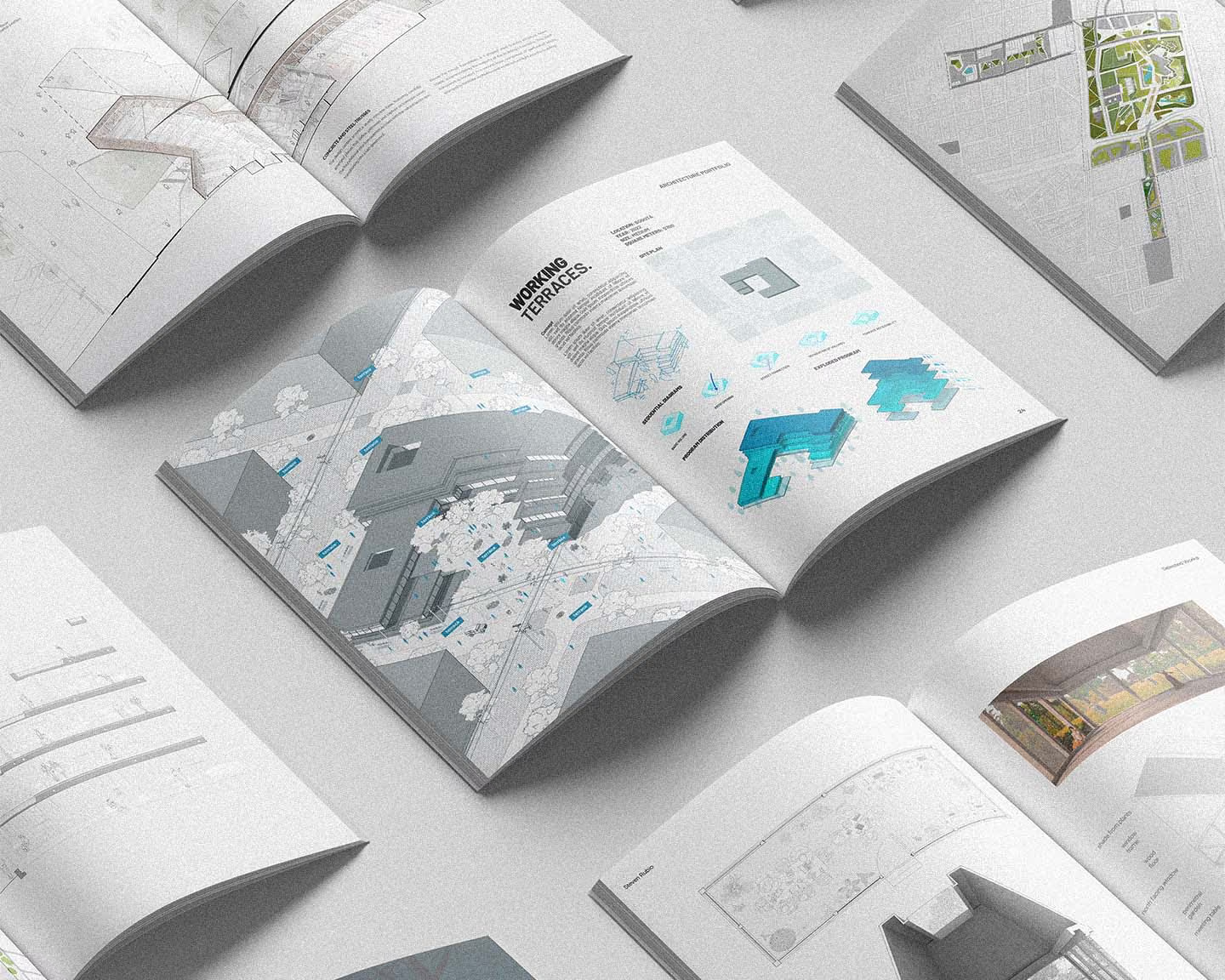
Build the Projects
Build every remaining project spread. With the system in place, the work becomes showing each idea as clearly as you can. This is the heaviest week of the six and the calendar is built around that.
What you’ll learn:
How much of a project to show
A visual hierarchy that makes each project’s strongest idea clear at a glance
How to hold cohesion across work made years apart
Make It One Document
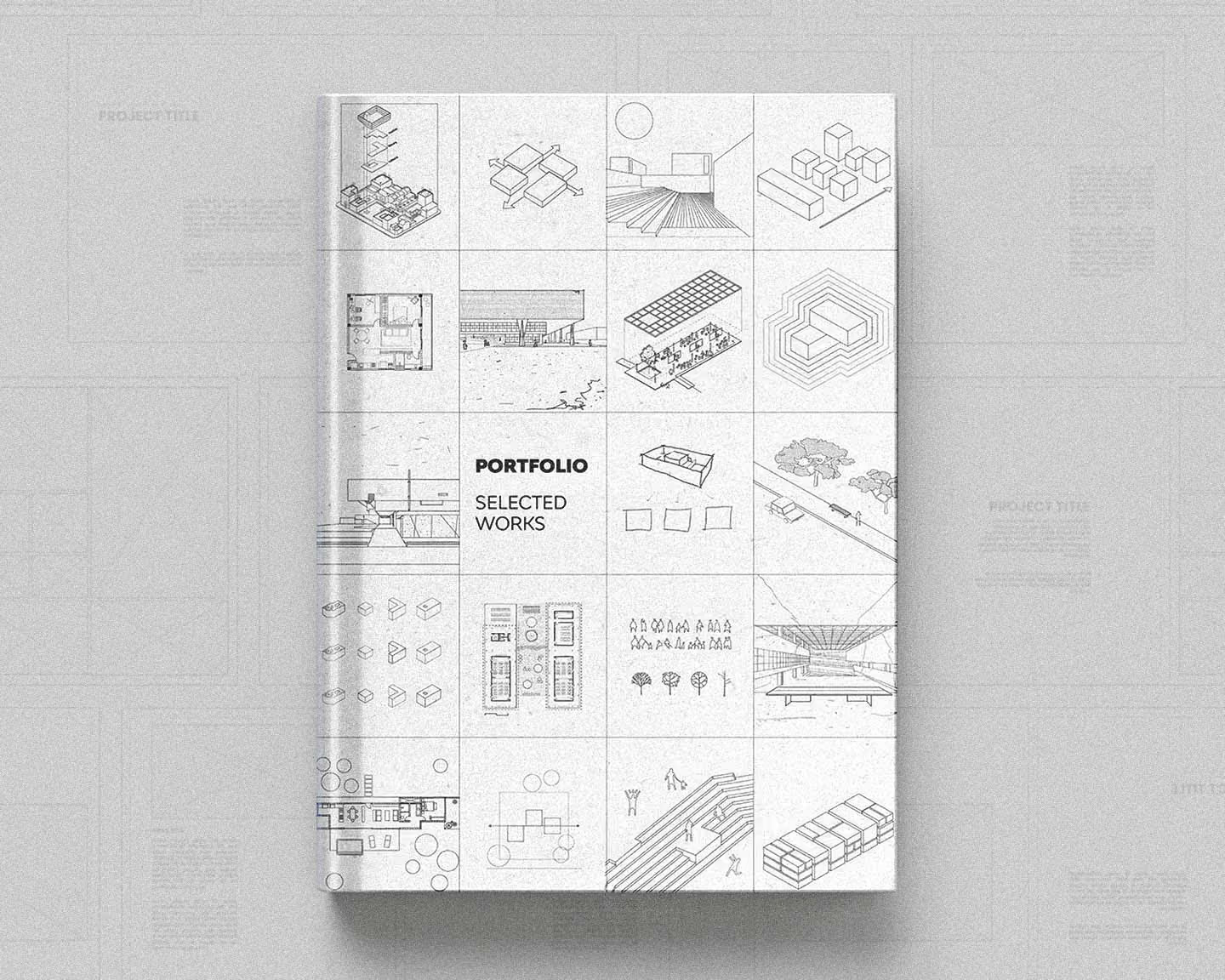
Design the cover and read the portfolio from beginning to end. This is where separate projects need to become one deliberate document.
What you’ll learn:
How to sequence the work so it reads as one document
Why the cover comes last
What to cut when you are too close to the work
Export, Publish, Send
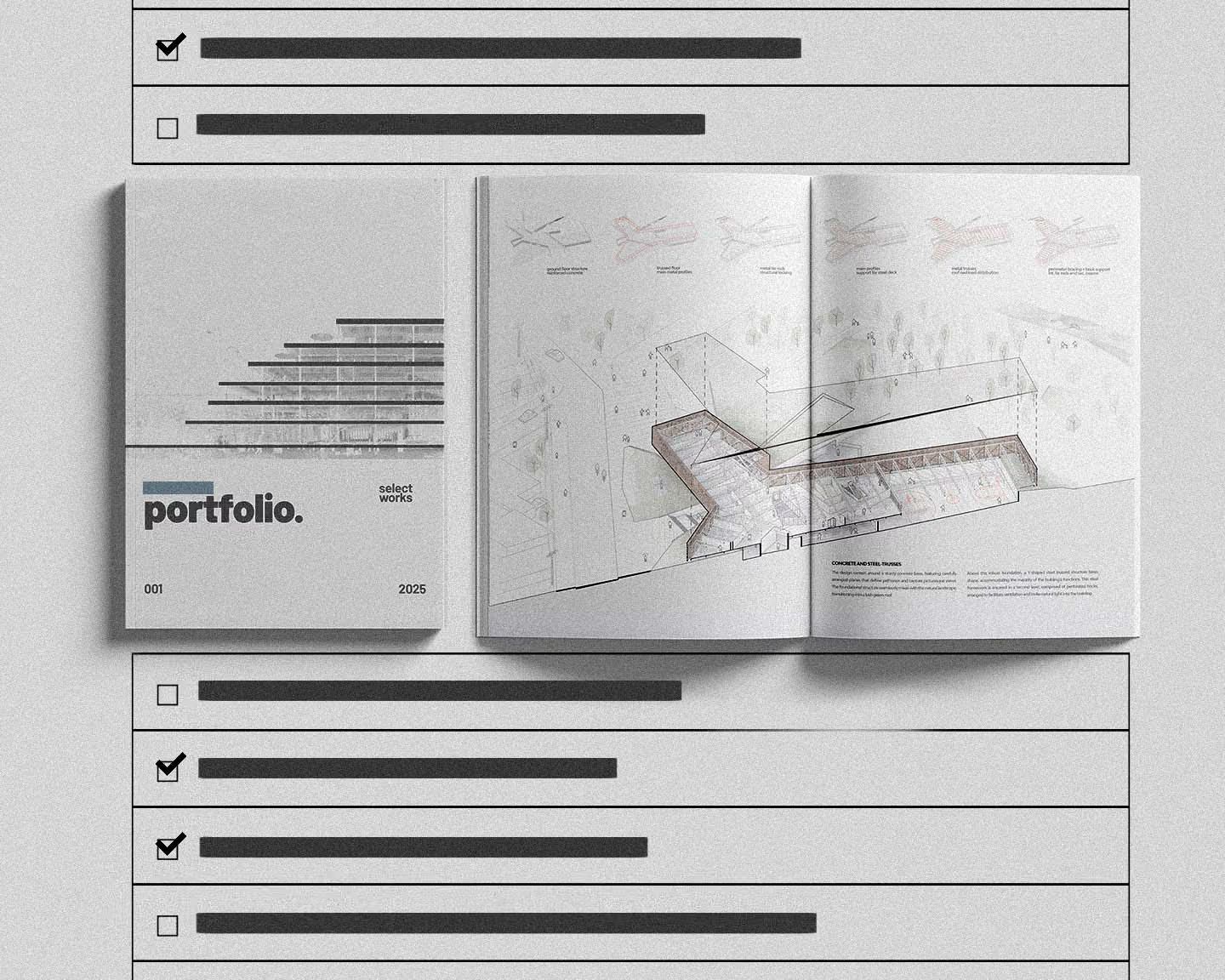
Export the finished portfolio, decide where it lives, and send it. The workshop ends with a file that is ready to submit.
What you’ll learn:
How to export spreads at the smallest honest file size
How to publish without a subscription
What to check before attaching it to anything
What a week actually looks like.
The calendar is published before enrollment opens, so you can hold it against your own term dates and decide honestly whether it fits.

Every week, for six weeks
Watch
A masterclass, recorded
Any day, any hour, as many times as you want. English subtitles on all of them.
Show up
A live clinic for 90 minutes
Work goes on screen, questions get answered, and whatever stopped you that week gets dealt with. That is the one part a recording cannot do.
Do the work
One thing at a time
The Playbook tells you what it is before the week starts. This is the part everything else runs on.
Beyond the 90 minutes of clinic, the work is your own file. Weeks 1 and 3 are light. Weeks 4 and 5 are the heavy ones, because that is when every remaining project gets built. Plan for 45 minutes a day, and expect the middle of the workshop to ask for more than the ends.
Everything runs in English. The masterclasses are subtitled. The clinics are live, so if English is your second language, the chat is always open and plenty of people ask their questions there instead of out loud.

6 to 16 Oct 2026
Enrollment opens.
The price steps up on 10 and 14 October.
VIP applications are read as they arrive.
20 Oct 2026
The Cohort starts.
Week 01 masterclass, then the first clinic that Friday.
~16 Nov 2026
A portfolio you could actually send exists.
Two weeks left to sharpen it, not to start it.
27 Nov 2026
The last clinic. Both times, as usual.
The workshop ends on a review, not on a lesson.
30 Nov 2026
The Cohort ends.
You keep the playbook and a year of recordings.
December 2026
You send it.
Firms and applications, or a master's deadline if that is your route.
The dates, start to finish.
Fixed and published before you pay for anything. The clinics are the Fridays, the work is the weeks between them, and the point of the whole thing is the last row.
What's in your hands when it's over.
A portfolio you'd actually send.
Assembled, sequenced, and taken through six clinics. A file you would attach to an application this week, built against what the people who read those applications told us they look for.
The result
The Playbook
What you decide each week, what is due, the checklists, and the export and file-size specs at the back. A PDF you keep, and one that still works the next time you rebuild.
And, along the way
Publishing without a subscription
The routes we use ourselves to put a portfolio online, including the free ones, with the trade-offs written down instead of glossed over.
Everything recorded, for a year
The masterclasses with subtitles, and every clinic, including the ones about other people's work. You can run the whole calendar again on your next portfolio.
One workshop. Three ways in.
Everyone gets the same six weeks of material. Two things change: how much of our attention lands on your portfolio, and which hour you sit down for the clinic.
01
Pick how much attention you want.
This is the one that changes the price.
Always open
The Method
Everything we teach, in the order it is meant to be worked through. Do it on your own time and you finish with a portfolio.
Where everyone starts
The recorded masterclasses
With English subtitles. Every principle shown on real portfolios.
Portfolio in Action
Both of us building a portfolio end to end. What gets picked, what gets paired, how the pages get sequenced, and why.
The Playbook
The week-by-week guide: what to decide, the checklists, the export specs. A PDF you keep.
Self-paced. No live sessions, and nobody looking at your work.
30 seats
The Cohort
You do it live with us. Your work gets looked at, your questions get answered, and we're there every week.
Everything in The Method, and
Live clinics
Your pages marked up live, with both of us saying what to cut and what to move. Everyone's work goes up, so you learn from the other reviews too.
The Playbook, run together
A fixed calendar and one deliverable a week, straight out of the Playbook. Everyone starts and finishes on the same day.
A shared workspace
Post work between clinics and get answers from us and the group without waiting for the next session.
Every session recorded
Yours for a year, clinics included.
A certificate of completion
Issued when you finish the six weeks and hand the work in.
10 seats, by application
The Cohort VIP
You do all of that, and then get time set aside for your portfolio alone rather than the group's.
Everything in The Cohort, and
Two written reviews
A full page-by-page read at week 3 and again at week 6, written down so you can work from it.
A 45-minute one-on-one
A call about nothing but your portfolio and the decisions you are stuck on.
Your portfolio read before we offer you a seat
The workshop is worth it for most portfolios, but not all. We would rather say so than take the money.
The Cohort is what most people should take. VIP is for a portfolio that needs an argument made about it in writing, and we will tell you if yours is not one.
02
Pick a time.
The clinic runs twice on the same Friday, at two hours. You pick the one that fits your week and keep it to the end.
Same pricing either way.
Clinic time 01
13:30 UTC
Fridays, 90 minutes.
19:00 India · 21:30 Singapore · 10:30 Brazil
or
Clinic time 02
18:00 UTC
Fridays, 90 minutes.
19:00 Central Europe · 15:00 Brazil · 13:00 New York
Both are recorded and posted within 24 hours, so a week you cannot make is not a week you lose.
Any seat, either time.
The two choices are independent.
Just more to make sure the workshop fits an international diverse group.
13:30 UTC
18:00 UTC
The Cohort, The Cohort VIP
One participant's finished pages.
This is the kind of work that emerges when portfolio decisions are made with clarity and intention. The spreads below are from a participant who continued developing and refining their portfolio using the principles discussed during the workshop.

Table of Contents

Aliaga Museum, pages 26 - 27
Beatriz Alonso
Spain
M.Arch Student
After feeling overwhelmed by the idea of reworking my portfolio, I decided to join this workshop to finally take action. It was the best decision I could have taken. Steven and Oliver teach you the basics to create a cohesive structure that works for you, breaking the theory into different design aspects to focus on each week. All this while keeping the process an open conversation for the group to interact, and learn from one another. Overall, the best course to join if you want your portfolio to stand out!!
Selected spreads from Beatriz’s final portfolio, developed and refined throughout the workshop.

Atrium, pages 20 - 21

Bevagna School, pages 8 - 9
Beatriz Alonso
Spain
M.Arch Student
After feeling overwhelmed by the idea of reworking my portfolio, I decided to join this workshop to finally take action. It was the best decision I could have taken. Steven and Oliver teach you the basics to create a cohesive structure that works for you, breaking the theory into different design aspects to focus on each week. All this while keeping the process an open conversation for the group to interact, and learn from one another. Overall, the best course to join if you want your portfolio to stand out!!
Selected spreads from Beatriz’s final portfolio, developed and refined throughout the workshop.
More from people who did it
Hear from others who joined the workshop and used it to push their portfolios forward. These are honest reflections from people who came in with ideas and left with something ready to share.
Leah Hoepelman
Dominican Republic
Professional
The Portfolio Workshop was such an immersive experience! Oliver and Steven had a remarkable ability to demonstrate and explain very technical and rigorous concepts related to portfolio, layout, and editorial design. They also showed how all of these could be effectively applied to showcase our craft and work.
What I truly gained from this course was the confidence to create a well-thought-out and unique portfolio that speaks directly to who I am and what I'm passionate about, rather than following the crowd and comparing myself to others. At last, they were also incredibly attentive and focused on each participant’s individual needs, which made the entire experience feel personal and deeply fulfilling.
What I truly gained from this course was the confidence to create a well-thought-out and unique portfolio that speaks directly to who I am and what I'm passionate about, rather than following the crowd and comparing myself to others. At last, they were also incredibly attentive and focused on each participant’s individual needs, which made the entire experience feel personal and deeply fulfilling.
Loaai Atef
Egypt
Professional
The workshop was a great experience! It gave me fresh insights into how to improve my portfolio and think more strategically about my presentation. I appreciated the clear guidance and felt more confident in my design direction after attending.
Jorge Perez
Guatemala
Professional
This workshop was honestly amazing! What I loved the most were the portfolio clinics. They felt super personal and helpful. Oliver and Steven really know how to guide you and push your work to the next level. Their feedback made a big difference in how I see and present my portfolio. Super grateful for the whole experience!
Sorilina Sánchez
Venezuela
Professional
This workshop took me from 0 to 10. I was struggling so much with putting together my new portfolio because my previous ones were merely academic, and I wanted this one to look very professional. The masterclasses, clinics, and "Portfolio in Action" sessions were invaluable sources of learning and inspiration. All the information was presented in a clear and organized way. I started from scratch, and now I have a portfolio that I am proud of and confident to show.
Willa Wischansky
Brazil
4th year Student
I'd like to say that I loved the workshop and learned so much! I value a lot everything I learned and I'm already planning to buy all the other courses!
Thank you guys for the amazing workshop and incredible work that you do! You two inspire me a lot and I hope someday to be as good!! Gratidão e um abraço! - Willa
Thank you guys for the amazing workshop and incredible work that you do! You two inspire me a lot and I hope someday to be as good!! Gratidão e um abraço! - Willa
Kami Huynh
United States
3rd year Student
This portfolio workshop was a great experience. The lessons were super well-organized, and it was clear that Steven and Oliver put a lot of thought into everything. Their tips were really practical, and watching how they approach their own work was one of the most valuable parts for me.
Even though I'm an interior design student, I still learned a ton from this architecture-focused course, especially about how to present work clearly and effectively.
It was also really cool to meet people from all over the world and see their different styles. I’d definitely recommend it to anyone looking to seriously improve their portfolio whether it is to apply to a master's program, a job, or to update your portfolio overall!
Even though I'm an interior design student, I still learned a ton from this architecture-focused course, especially about how to present work clearly and effectively.
It was also really cool to meet people from all over the world and see their different styles. I’d definitely recommend it to anyone looking to seriously improve their portfolio whether it is to apply to a master's program, a job, or to update your portfolio overall!
Micaela Butron
Canada
Professional
The Portfolio Workshop was exactly what I needed to elevate my portfolio. The direct feedback during the portfolio clinics was incredibly valuable, helping me understand what to improve and how to move forward with clarity. I appreciated the collaborative environment and the opportunity to learn from both Steven and Oliver, as well as the other students. My portfolio has improved tremendously since starting the workshop. This kind of support is rare in the architecture and urban design field, and I’m grateful for the experience. I would absolutely continue if the opportunity arises.
The two people who will be looking at your work.
Steven and Oliver built the two channels this audience already learns from. They've spent years reviewing real architecture portfolios on and off camera, project by project, so by the time yours comes up they've already been through hundreds of others.
Between the two channels: 900k+ subscribers, 19 portfolio review episodes.

Oliver Uszkurat
Founder of Upstairs
Oliver worked as an architect in Brazilian practices and won national design competitions before moving into teaching full time. He now runs Upstairs, where he teaches visualization and representation through courses, workshops and long-form video to architects and students worldwide.

Steven Rubio
Founder of Show it Better
Steven Rubio is not just an architect but an educator who established Show It Better in 2015. Guided by his passion for architectural representation, created an educational platform. He’s also a practicing architect and an artist exploring the transformations of Latin American cities through image manipulation.
TPW is for you if you're...
Applying for a job or a master's
Sitting on projects you have never laid out
Starting it again for the third time
Architecture, interior, urban and landscape. Students, recent graduates, and people already working. The one thing everyone in the room has in common is a folder of work and no document to send.
It is not for you if you want it handed to you finished. You will be putting work in every week and hearing what is not landing yet. That part does not get outsourced.